Steamtown National Historic Site
25 April 2007 Visit
On our way to NAMES 2007 we stopped in Scranton Pennsylvania to visit the Steamtown National Historic Site. Steamtown is located at the yard of the Delaware, Lackawana & Western Railroad in eastern Pennsylvania.
The weather was marginal with a huge storm coming in from the west and we were fortunate to conclude our visit before the rain started. From Scranton I had wanted to head up into New York state to visit the Glenn Curtis Museum in Hammondsport but my wife was worried about the weather and we headed west on Interstate 80 to Clarion where we stayed overnight. The storm passed during the night and the rest of our trip was in nice weather for the most part.
I know next to nothing about steam locomotives so there may be many errors on this page. I will put in a n email to Steamtown and ask if someone there can review this page and send me corrected information. In the meantime feel free to contact me with anything you may know that will make this page more accurate.
 L to R Eddie Moose, Miss Taffy, Roy Bear and Errol Groff. There is some
debate who is the biggest fool in the group. My vote goes to Roy
Bear. T Groff photo.
L to R Eddie Moose, Miss Taffy, Roy Bear and Errol Groff. There is some
debate who is the biggest fool in the group. My vote goes to Roy
Bear. T Groff photo.


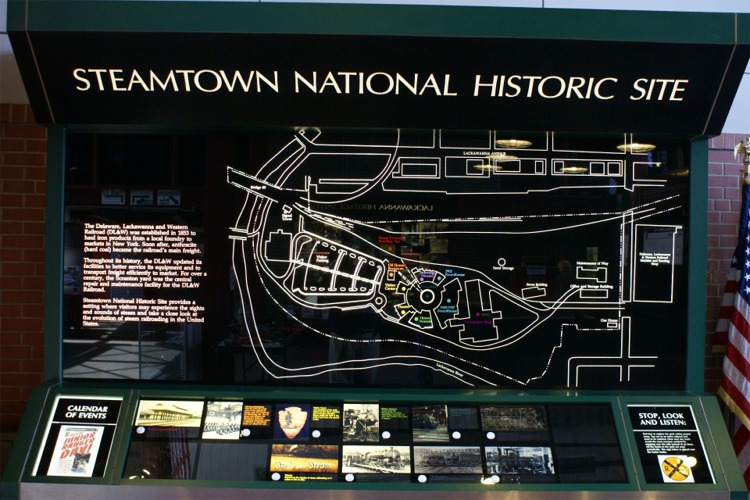 Layout of the Steamtown yard.
 In the central courtyard of the museum is a small collection of smaller locos.
 We toured the yard with this park ranger. He carried with him a collection
of maps and pictures that let him clearly explain how the yard worked in the
years gone by.
We toured the yard with this park ranger. He carried with him a collection
of maps and pictures that let him clearly explain how the yard worked in the
years gone by.
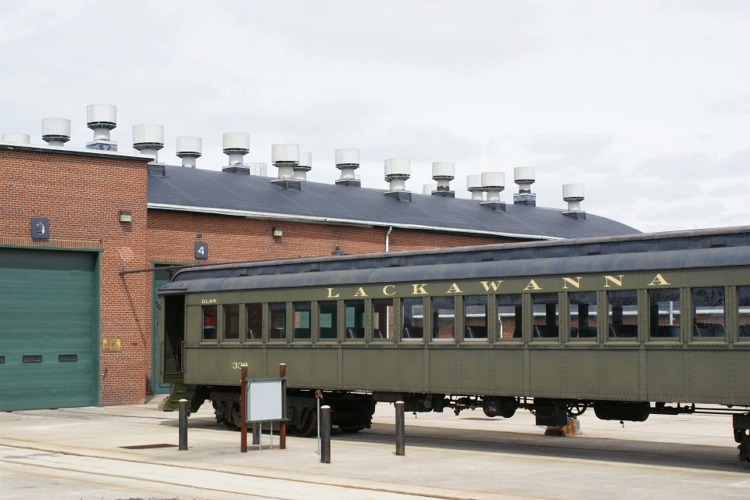
 This is one of the exhibit buildings. Made to resemble the roundhouse that
once stood on this site.
This is one of the exhibit buildings. Made to resemble the roundhouse that
once stood on this site.


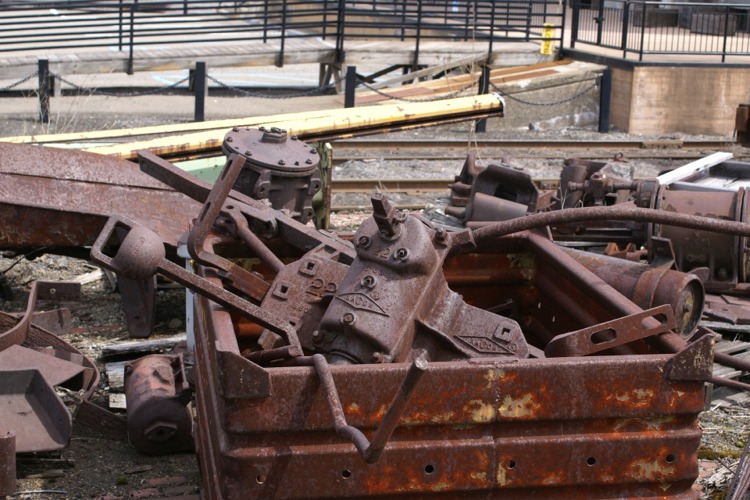
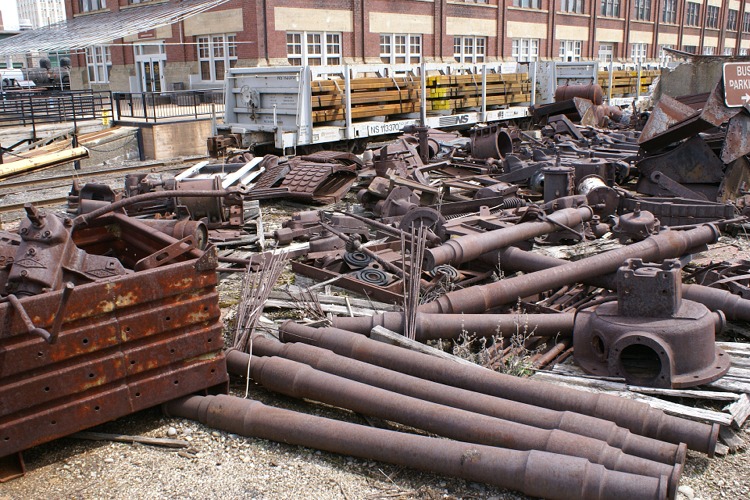 Our guide told us that this area of the yard would have looked much like this
when the yard was an active part of the railroad. Almost nothing was
discarded by the railroad. Old parts were stored in this yard to be
rebuilt when feasible or to be transported a few hundred yards down the line to
be melted in the yard foundry and recast into new parts.
Our guide told us that this area of the yard would have looked much like this
when the yard was an active part of the railroad. Almost nothing was
discarded by the railroad. Old parts were stored in this yard to be
rebuilt when feasible or to be transported a few hundred yards down the line to
be melted in the yard foundry and recast into new parts.
 This building was once part of the rail yard. It housed the foundry and other
shops. It is now part of the defense giant General Dynamics and produces
parts of naval munitions. Pretend that you didn't see the photo as I was not
supposed to photograph beyond the fence but I did want to include a picture of
the crane.
This building was once part of the rail yard. It housed the foundry and other
shops. It is now part of the defense giant General Dynamics and produces
parts of naval munitions. Pretend that you didn't see the photo as I was not
supposed to photograph beyond the fence but I did want to include a picture of
the crane.
 Behind our guide is the Gas House which produced coal gas for use in the yard.
 Yes, this is a concrete pad with a faint ring on it. So? Scattered
through out the yard were about eighteen of these pads which supported tall
tanks of water which were fed by another very large tank positioned a distance
away at a much higher elevation. The height differential provided natural
pressure which enabled the engine's water tank to be filled very rapidly through
a large diameter hose.
Yes, this is a concrete pad with a faint ring on it. So? Scattered
through out the yard were about eighteen of these pads which supported tall
tanks of water which were fed by another very large tank positioned a distance
away at a much higher elevation. The height differential provided natural
pressure which enabled the engine's water tank to be filled very rapidly through
a large diameter hose.


 Terri Groff photo
 This silo had a capacity of 90 train cars of sand. The sand was used to
fill the sand domes on the locomotives and from there it could be fed to the rail
to provide traction in slippery conditions. The silo had steam lines
running through it to dry the sand and keep if from freezing in the winter.
This silo had a capacity of 90 train cars of sand. The sand was used to
fill the sand domes on the locomotives and from there it could be fed to the rail
to provide traction in slippery conditions. The silo had steam lines
running through it to dry the sand and keep if from freezing in the winter.
 The curved roof on this maintenance shed is the original shape.
 Thank
goodness we don't need this sort of snow removal equipment these days
Thank
goodness we don't need this sort of snow removal equipment these days

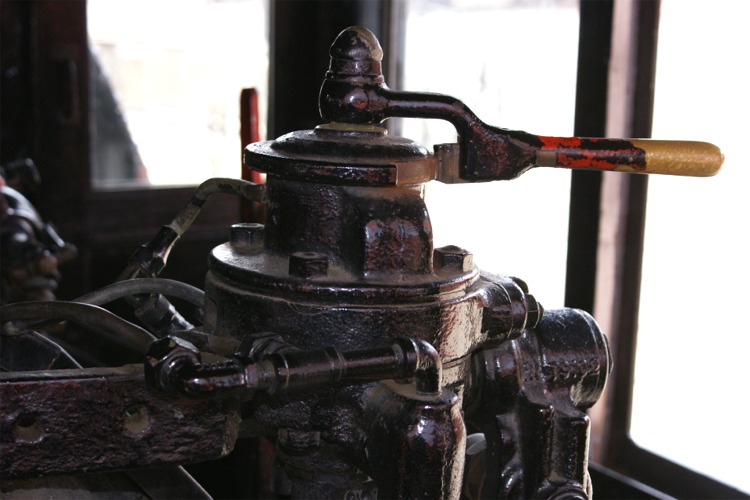

 A casting pattern. This was in a glass case which is why it looks odd
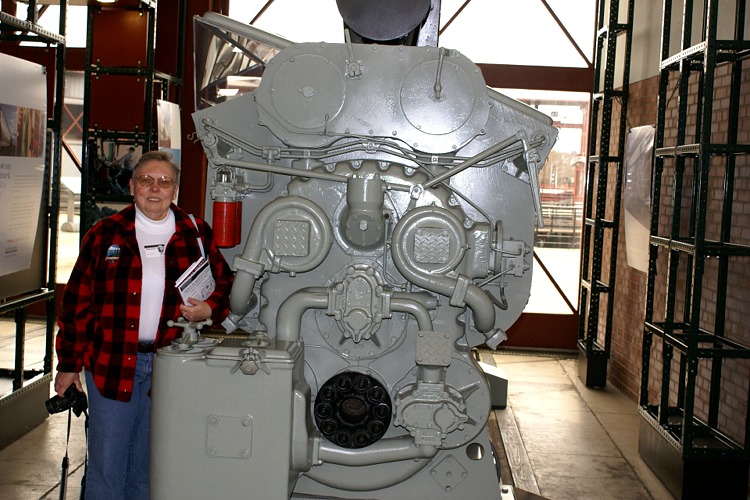 My wife Terri next to a diesel engine from a locomotive

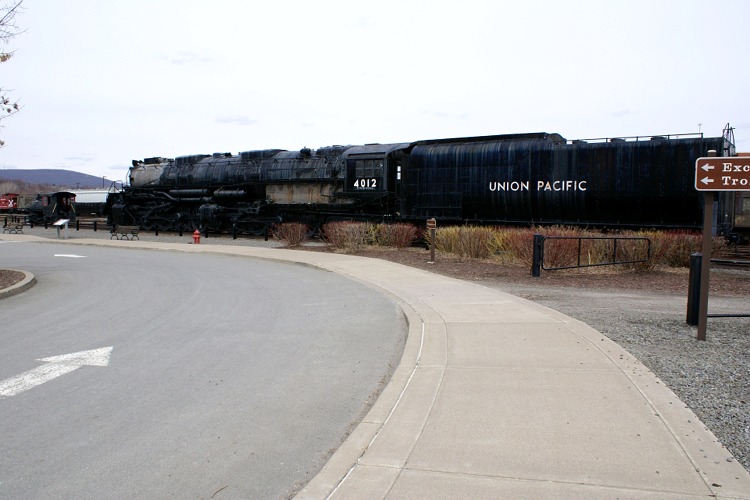


Union Pacific "Big Boy"

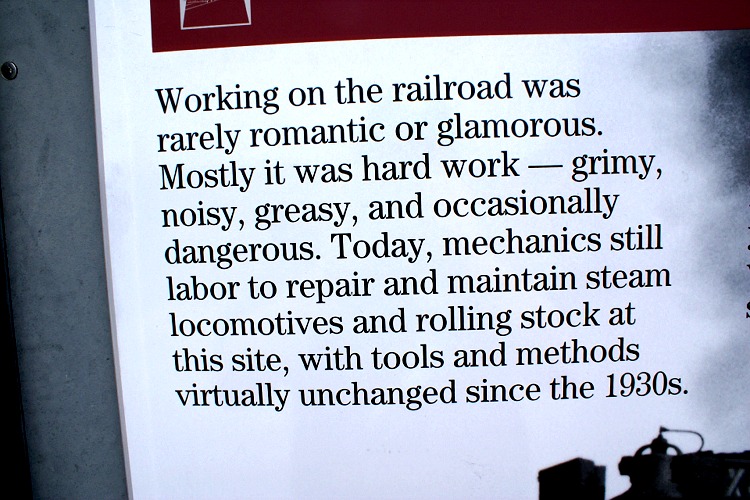

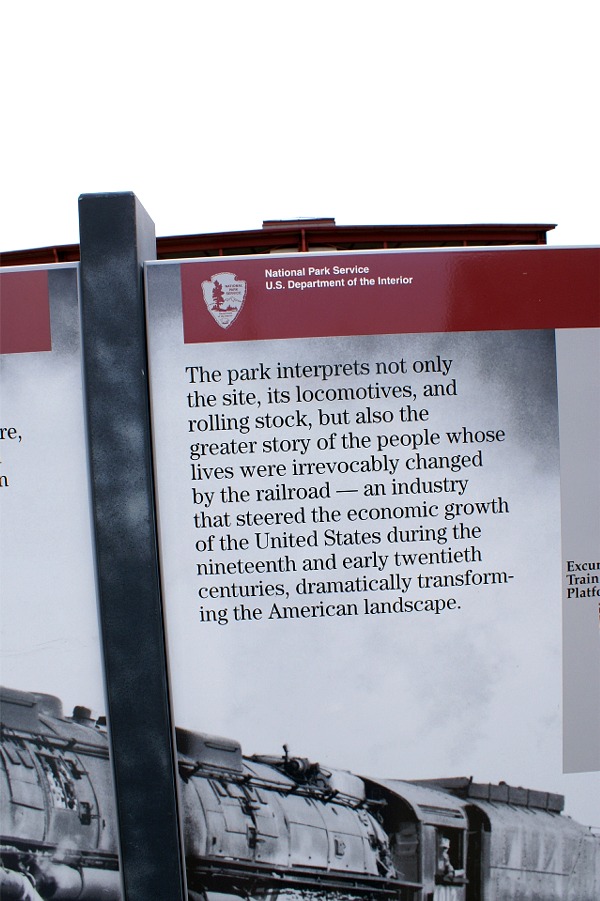


 Roy Bear gets fitted with a Steamtown T shirt


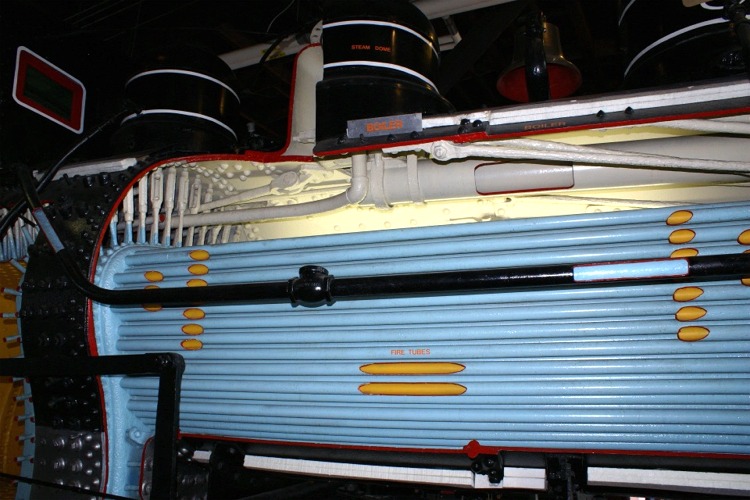
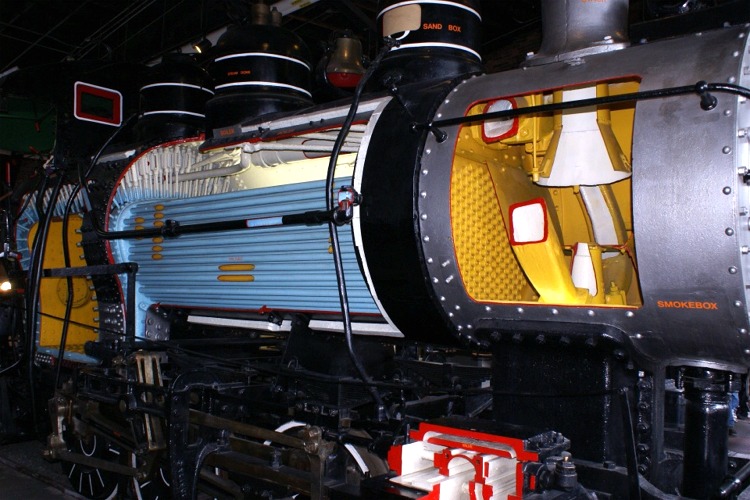

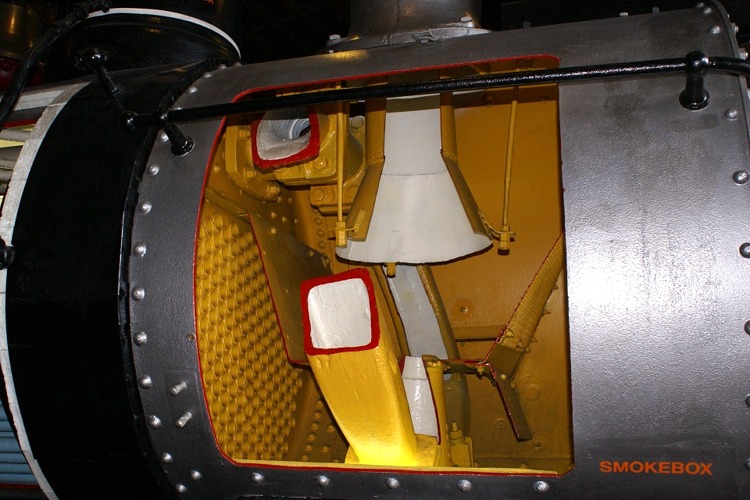



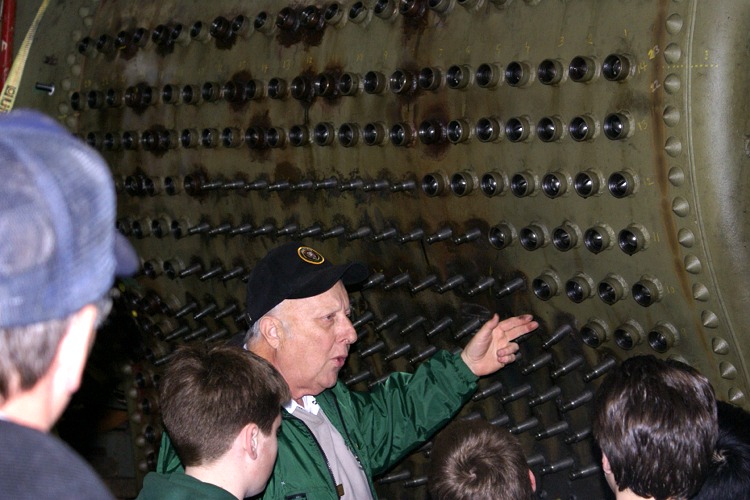
 Not often you get to stick your head into a locomotive boiler T. Groff
photo
Not often you get to stick your head into a locomotive boiler T. Groff
photo


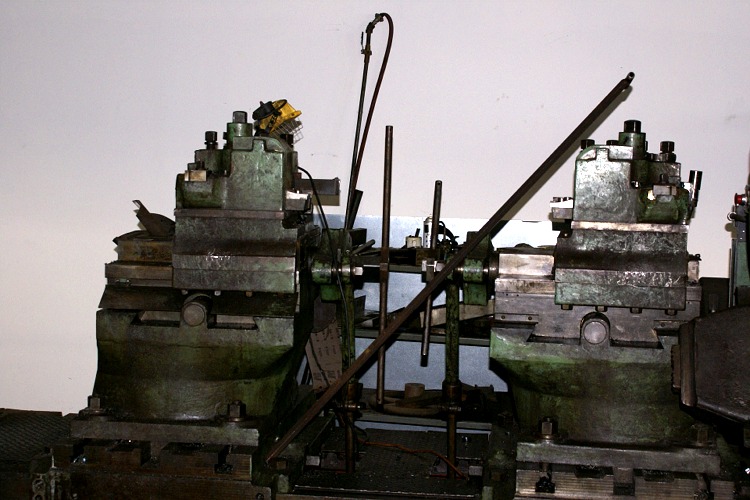

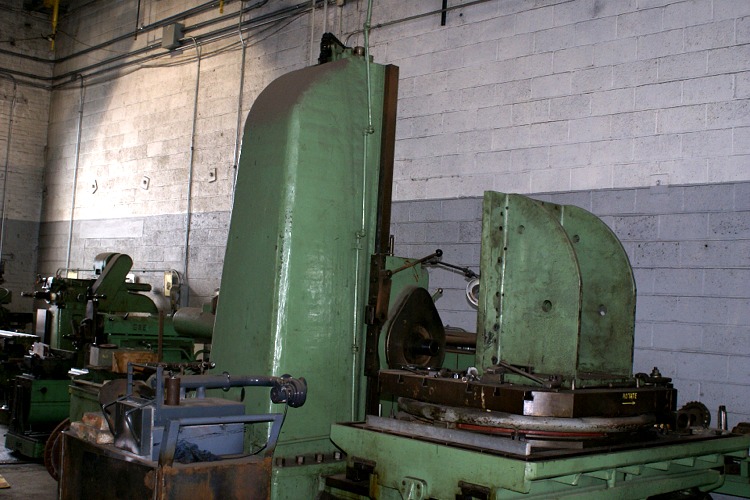


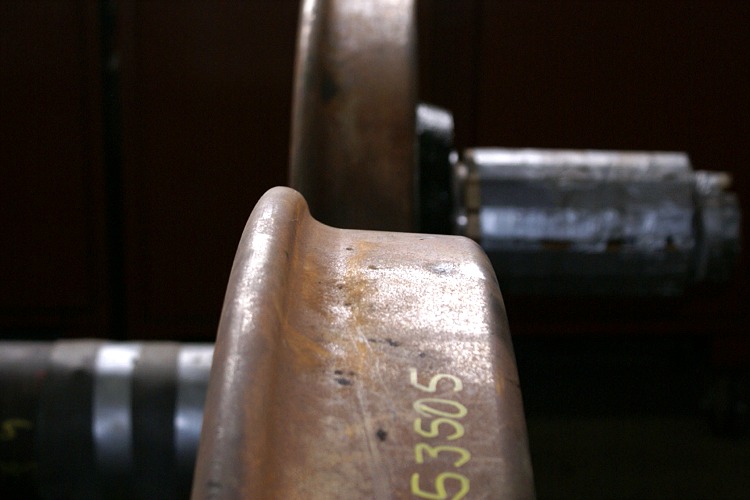


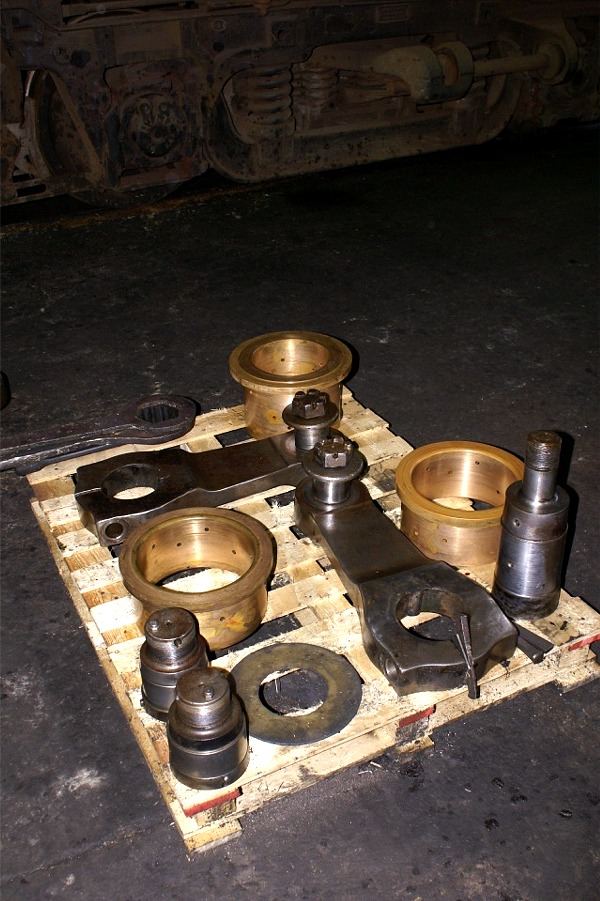
 These castings were in the machine shop and if I understood the answer to
my question correctly they are similar to the pieces in the cutaway
locomotive. See the blue arrow in the right had photo.
These castings were in the machine shop and if I understood the answer to
my question correctly they are similar to the pieces in the cutaway
locomotive. See the blue arrow in the right had photo.


 This Ranger was trailing our tour group to heard stragglers. That would be
me! T. Groff photo
This Ranger was trailing our tour group to heard stragglers. That would be
me! T. Groff photo